
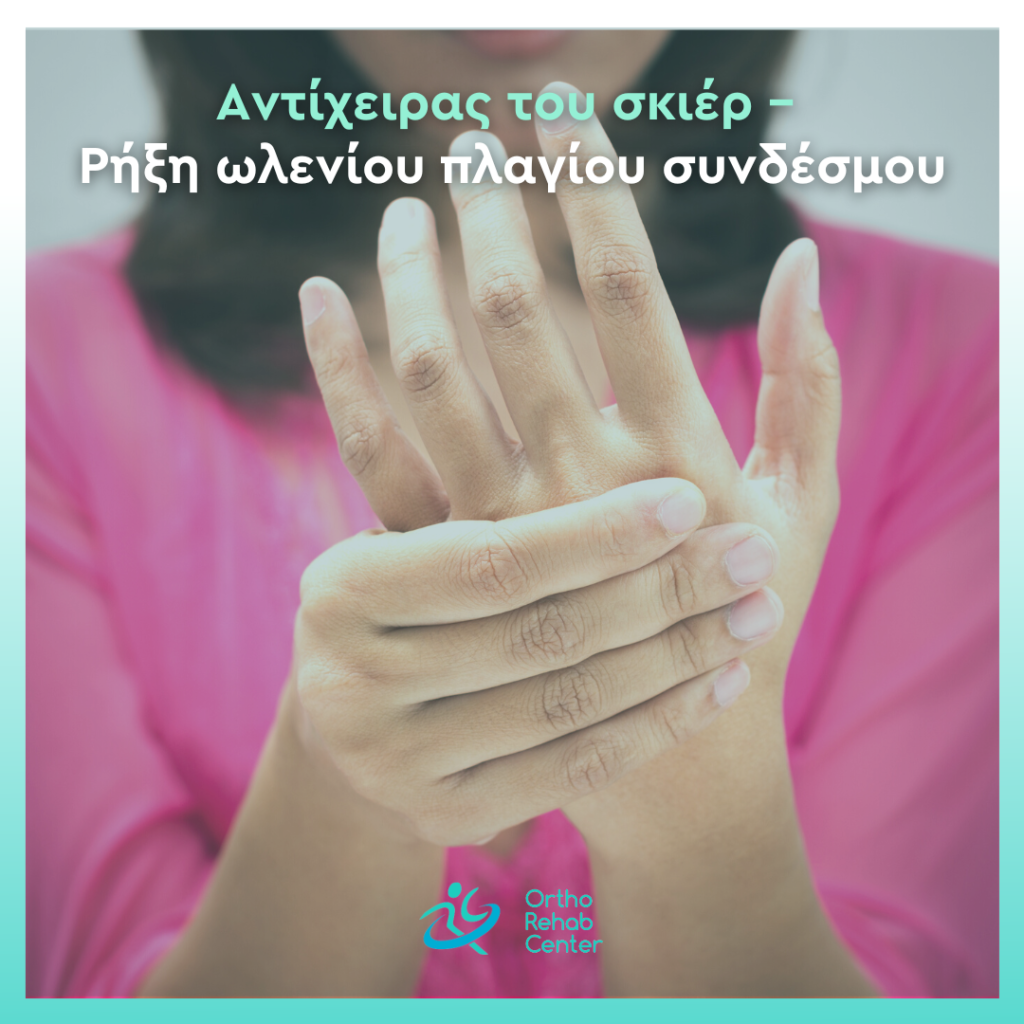
Skiing is a popular winter sport enjoyed by millions of people each year. However, along with the excitement of the sport comes the risk of injuries, one of which is skier’s thumb. Skier’s thumb, medically known as a rupture of the ulnar collateral ligament, is a common injury among skiers and snowboardersThis ligament is located in the thumb, specifically on the inner side toward the index finger. The injury occurs when this ligament, which holds the thumb in place, is stretched or torn, usually due to a fall or by gripping a ski pole.
Causes of Skier’s Thumb
The rupture of the ulnar collateral ligament can occur when the thumb bends suddenly and forcefully, either backward or sideways. Another very common cause, which actually gave the injury its name, is skiing accidents. For example, when a skier falls with the hand extended to the ground while still holding the ski pole, the ligament stabilizing the thumb is likely to tear or overstretch.
Symptoms of Skier’s Thumb
Skier’s thumb is accompanied by symptoms such as:
- Pain
- Swelling
- Difficulty in gripping or holding objects
- Deformity or dislocation of the thumb
Treatment of Skier’s Thumb
The condition can be managed conservatively, which may include:
- Rest
- Avoiding activities that worsen symptoms
- Cold therapy (ice application)
- Physiotherapy program focused on strengthening and flexibility
- Medication
- Use of a thumb splint
In severe cases, skier’s thumb may require surgical intervention. In any case, it is recommended to consult specialists promptly to prevent further worsening of the condition.
The best way to prevent skier’s thumb is to ensure that ski pole straps are properly adjusted and fit securely around your wrists. This helps prevent the poles from slipping out of your hands in case of a fall. Additionally, it is important to ski at a level that matches your ability and to remain aware of hazards on the slopes, such as trees or rocks.
 English
  Greek
Greek